Why Most Fitness Goals Fail And What to Do Instead
TOPIC: Mindset
Athletes are great at setting goals. Build strength. Gain muscle. Improve body comp. Picking a goal is easy, but actually following through long enough to actually get there is a different story.
It’s easy to get fired up about a new program, a new season, or a big target. But goals only matter if they lead to consistent action. Without a real plan, accountability, and a system you can follow, even the best intentions lose momentum.
This article breaks down how to set goals that actually mean something, and more importantly, how to follow through on them.

Written By
Phil White
Phil White is the co-author of Waterman 2.0 (with Dr. Kelly Starrett), The 17 Hour Fast (with Dr. Frank Merritt), Unplugged (with Dr. Andy Galpin and Brian Mackenzie) and Game Changer (with Fergus Connolly). He writes for Train Heroic, HANAH, Momentous, XPT, Onnit, StrongFirst, TRX, McGregor FAST, and other leaders in human performance. In a previous life, Phil was nominated for a screenwriting Emmy. He lives with his wife and two sons in the mountains of Colorado. Connect with Phil at www.philwhitebooks.com
Why Good Goals Still Go Nowhere
So what’s going on here? Why do we so often fail to follow through on goals that seem meaningful at the start?
Part of the problem is that even the word goal can start to feel vague—almost interchangeable with “hope” or “dream.” It becomes less about a concrete outcome and more about something you’d like to achieve in a perfect world, but probably won’t.
There’s also the issue of setting goals out of obligation instead of real personal buy-in. It’s easy to get caught up in what everyone else is chasing or to feel like you should have a big target just because that’s what people do. But goals set from external pressure rather than intrinsic motivation rarely last. Nobody achieves something meaningful by simply following the crowd.
At its core, meaningful change requires more than vision or good intentions. You can picture a better version of yourself. You can genuinely want progress. But wanting something and building toward it are two very different things. To actually reach a goal, you need a strategy for how to get there—and then you need to follow through on that plan.
Prioritize & Execute
Jocko Willink and Leif Babin say it best in their bestselling book Extreme Ownership: you must prioritize and execute. You might have the best ideas in the world and be perfectly capable of deciding which one is the most pressing. But if you don’t go out and actually do the thing, it’s just talk.
Get Smart: Start With a Clear Target
A goal should do one thing: give direction to your training.
If it’s too broad (“get stronger,” “get in shape”), it won’t translate into action. If it’s too rigid or unrealistic, it won’t hold up when life inevitably gets in the way. This is where SMART goals can help.
Here’s how SMART goals work:
- Specific – What exactly are you going to achieve? So for example, if you’re a rower, simply saying, “I want to row faster” isn’t going to cut it. Clearly stating, “I want to row a 6:40 2K” is much better.
- Measurable – What are a few simple data points you can use to track your progress and, if necessary, adjust the final goal?
- Achievable – It has become cool to post aphorisms like “Anything is possible” on Instagram, but while we’re all in favor of positivity, it’s actually untrue. If you currently squat 200 pounds and want to hit 300 by the end of the year, go at it. Wanna bend the bar with 800 pounds? Probably not going to happen in 12 months.
- Relevant – Why do you want to hit this target and how, as my co-author Fergus Connolly says, will it affect the scoreboard on game day? Don’t pick some arbitrary goal, but one that will actually improve your overall performance or life.
- Time-bound – What’s the final deadline to achieve the goal, and what are some milestone dates along the way?
Who Are Your People?
Once you’ve tested the integrity of your goals by running them through the SMART filter, it’s time to start on the road to actually achieving them.
A lot of people use fitness trackers to monitor their progress, but research has shown that this kind of extrinsic motivation falls flat after a while, with one study concluding that people who used a wearable for a year didn’t improve their health any more than those who went device-free.
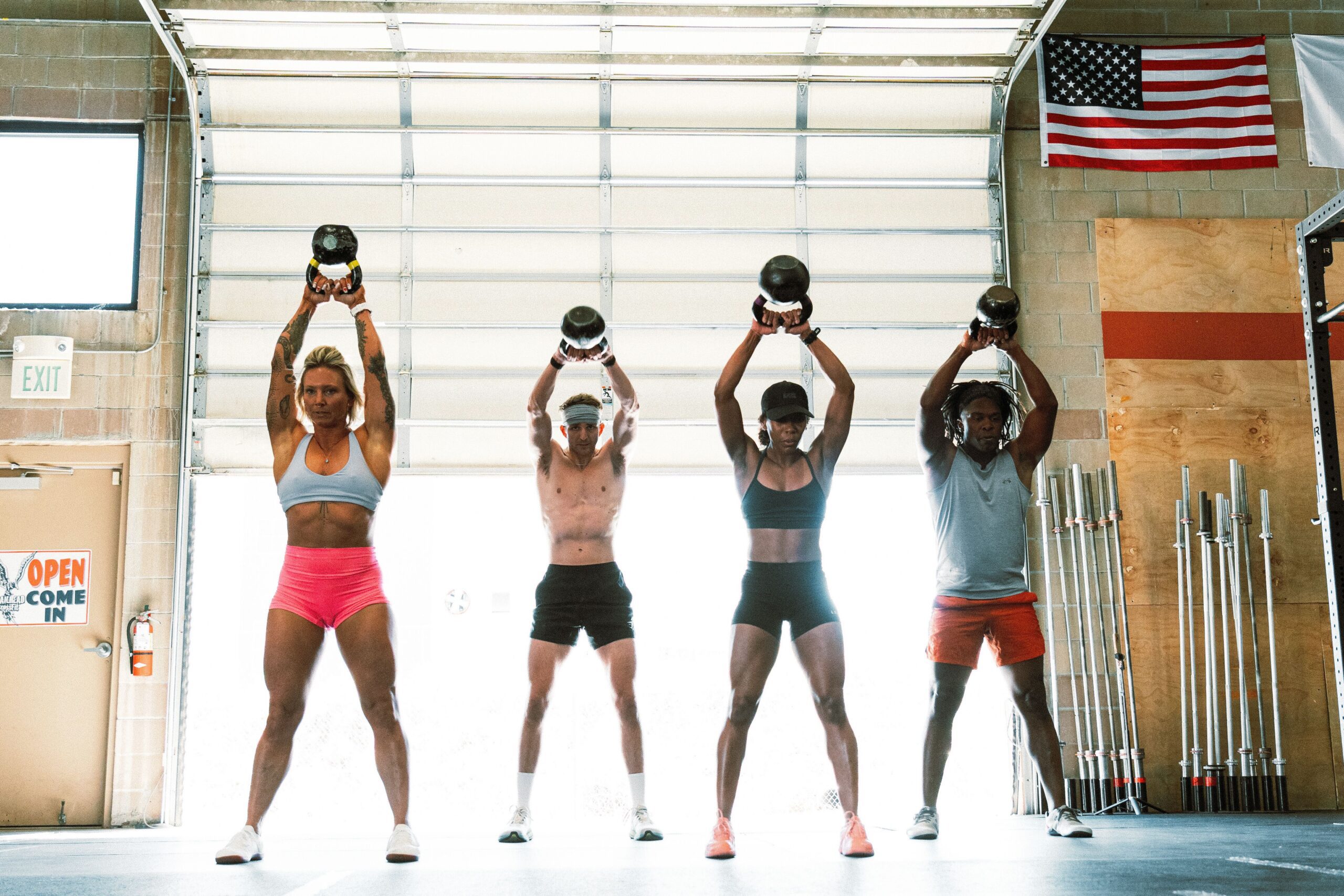
A better option? Get a friend or family member to keep you on the hook. If you know a friend is going to come to your house at 6 AM every Monday, Wednesday, and Friday to pick you up for a joint gym session, you’ll most likely shake off sleepiness and get your butt out the front door. Whereas when that alarm goes off and you’re going alone, that snooze button will seem so much more tempting.
As the old African poem goes, “If you want to go quickly, go alone. If you want to go far, go together.”
Seek Out a Sensei
In The Karate Kid (the Ralph Macchio one, not the Jaden Smith version), our protagonist starts trying to solve his bullying problem by doing karate from a book. But unless you’re self-appointed jiu-jitsu black belt JP Sears, you can’t use a book or YouTube video to take a shortcut to your end goal. If Daniel had kept going down that path, Johnny would’ve kept kicking his ass. What he needed was the tutelage of Mr. Miyagi to guide him.
Same goes for you. Whether it’s in-person or virtually, a coach can provide the kind of expertise you need not only to obtain a specific goal, but also to develop complementary skills that will serve you well long after you’ve achieved it.
Going back to our squat example, an expert lifting coach won’t just help you pack pounds on the bar, but also help improve your movement quality, mechanics, programming, and recovery, all of which will mean far more in the long run than you being able to move more plates up and down. If you want to invest in yourself, pony up for some high-quality coaching.
Sort Out Your Systems
Another way to make sure you don’t join the majority who quickly abandon their goals is to put systems in place to help you succeed. Yeah, I know I just took a shot at the limitations of wearable tech (which happens when you write a book called Unplugged), but certain technologies can help you outline and stick to your plan.
For example, Train Heroic provides daily workouts and gives you a level of on-the-go accountability that can augment that of your teammates, friends, and so on. It’s a simple binary – did you do the work or didn’t you? If it’s the former more often than not, you’re much more likely to hit or even exceed the target you set.
And if you find yourself starting to slip (don’t do that!), then either ask your partner or coach to help. Or look to a master motivator like Jocko Willink to recapture your mojo.
See Your Future, Be Your Future
In the clamor and chaos of our busy lives, it’s all too easy to let our goals recede in the rearview mirror as time goes on. To prevent this from happening, keep them front and center in a different kind of mirror.
Let’s hear from former Navy SEAL David Goggins, who knows a thing or two about ongoing motivation. “Write all your insecurities, dreams, and goals on Post-its and tag up your mirror,” Goggins writes in his book Can’t Hurt Me. “Each step, each necessary point of self-improvement, should be written on its own note. For example, if you’re trying to lose 40 pounds, your first Post-it may be to lose two pounds in the first week. Once that goal is achieved, remove the note and post the next goal of two to five pounds until your ultimate goal is realized.”
Such tactics didn’t just help Goggins go from a 297-pound “depressed, overweight young man with no future” into a shredded SEAL, Army Ranger, and Air Force Tactical Air Controller, but also powered him to become an endurance athlete Outside declared to be the “Fittest (Real) Man in America.”
If visualization is good enough for Goggins, it’s good enough for you and me.
Commit!!
Are you in, or are you out? There’s no point in stating a goal and then pursuing it half-heartedly. That’s just a waste of your time. If you are going to summit the mountain (literally or metaphorically), having the right people, the best coaching, and the fanciest systems in place is going to help, but it’s not everything.
Simply put, nobody can do the work for you. It’s going to be on you to show up day after day and put in the effort. Then to get sufficient recovery so you can show up tomorrow and do it again. That’s going to take willpower, determination, and conviction. As Goggins writes, “I hope you’re ready. It’s time to go to war with yourself.”
Find Your Perfect Training Plan
Sometimes all you need to reach your destination on your fitness journey is an expert guide. Look no further, we've got you covered. Browse from thousands of programs for any goal and every type of athlete.
Try any programming subscription FREE for 7 days!
Related Articles
You May Also Like...

Queer Therapy Talk: What is Pride Fitness?
Over his years helping gay clients work through emotional traumas, Craig Freund has witnessed trends relating to shame, self-esteem, and body image. Queer people are more likely to experience body image issues due to being historically ostracized from society. Healing...

5 Strategies To Crush Your Fitness Goals
Maybe you already started, maybe you’re in a slump, or maybe you need that kick to get out the door. Everyone (yes, everyone) needs motivation and accountability when chasing after big goals. These five accountability strategies help you obliterate your goals and...

How Mental Imagery Can Boost Your Strength Training Performance
What goes on in your brain before you attempt a big lift? Are you fighting off anxiety demons? Thinking about dinner? Or are you zoned in on the task before you. Turns out, a little mental strategy goes a long way. Joseph Lucero, owner of Harvesting Strength, is a...
Queer Therapy Talk: What is Pride Fitness?
Over his years helping gay clients work through emotional traumas, Craig Freund has witnessed trends relating to shame, self-esteem, and body image. Queer people are more likely to experience body image issues due to being historically ostracized from society. Healing...
5 Strategies To Crush Your Fitness Goals
Maybe you already started, maybe you’re in a slump, or maybe you need that kick to get out the door. Everyone (yes, everyone) needs motivation and accountability when chasing after big goals. These five accountability strategies help you obliterate your goals and...

Want more training content?
Subscribe



For Coaches
For Athletes
About
Support
Training Lab
Access the latest articles, reviews, and case studies from the top strength and conditioning minds in the TH Training Lab!
Made with love, sweat, protein isolate and hard work in Denver, CO
© 2026 TrainHeroic, Inc. All rights reserved.