Prep Your Body for a Better Workout: How to Warm Up Correctly
TOPIC: Strength & Conditioning
Warm-ups and activation exercises are a non-negotiable before a workout. If you want to lift well, move well and get more out of your training, your warm-up needs to be part of the plan.
Not only does a good warm-up help you mentally prepare, but it also increases blood flow, improves mobility, wakes up the muscles you need, and helps you move with better control. Whether you’re lifting, sprinting, jumping, conditioning, or doing sport-specific work, warming up is key.

Written By
Ben Kessel
Ben Kessel, CSCS, is a strength & conditioning coach and founder of Priority Fitness. He has been professionally coaching for more than 20 years, working with athletes ranging from amateur to professional. He is also an endurance athlete and coach.
Most people repeat the same movement patterns every day. You sit, stand, walk, drive, work at a desk, train in familiar positions and often rely on the same dominant muscles to get things done.
Over time, your body adapts to those patterns. Some muscles become overactive while others become underused. Your quads start taking over every lower-body lift, and your glutes are hard to activate. Your shoulders feel tight when you press overhead and your lower back works harder than it should during hinging movements.
A well-designed training session can help correct these imbalances, but to get those benefits, you need to prepare your body to move well first.
What Happens When You Skip the Warm-Up
When you’re short on time, skipping the warm-up might seem like the best way to make the most out of your time in gym but getting right into the “meat” of the workout.
But this isn’t the case.
Your body is smart, and if the right muscles aren’t properly activated, it’ll find the easiest way to complete a movement. That often means relying on the muscles that are already dominant instead of recruiting the muscles the exercise is meant to train.
For example, if you are quad-dominant and your glutes are not firing well, jumping straight into squats, lunges or split squats may only reinforce that pattern. Your quads keep doing most of the work, your glutes stay underactive and the imbalance gets stronger instead of better.
The same thing can happen in upper-body training. If your traps or shoulders take over every press or pull, you may miss the chance to properly engage your back, lats, lower traps, serratus, or core.
A good warm-up interrupts those patterns, and gives you time to increase blood flow, open up your range of motion, and activate the muscles you’re going to be using.
How to Warm Up for a Workout
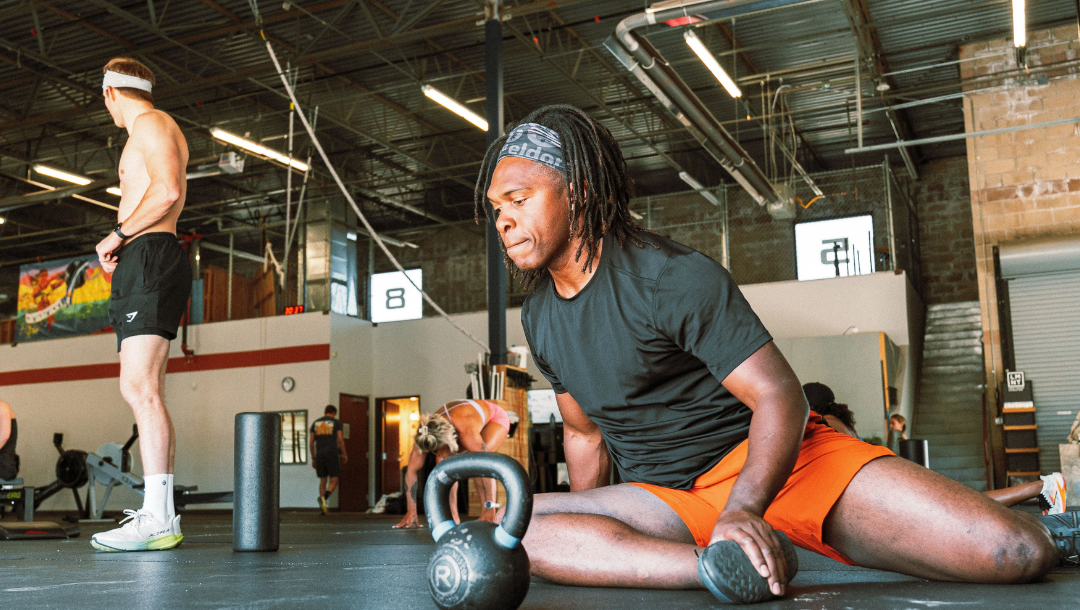
A warm-up doesn’t need to be complicated, but it does need to be intentional. The goal is to move from general preparation to more specific activation so your body is ready for the session ahead.
A solid warm-up can take about 10 to 20 minutes, depending on the workout. Here is a simple structure:
1. Start With General Movement
Spend the first few minutes increasing blood flow and getting your body temperature up. This can include light cardio, bodyweight movements or simple dynamic drills.
Examples include:
- Bike, rower or incline treadmill walk
- Marching in place
- Jumping jacks
- Hip openers
- Arm circles
- Light jogging in place
- Bodyweight squats
2. Add Dynamic Mobility
Next, move through ranges of motion that prepare your joints for the exercises in your workout. Focus on controlled movement, steady breathing and gradually increasing your range.
Good options include:
- Deep reverse lunges
- Lateral lunges
- Leg swings
- World’s greatest stretch
- Thoracic rotations
- Deep squats
- Shoulder pass-throughs
- Hip airplanes
Do not rush through this part. Mobility work is most useful when you pay attention to how you are moving.
3. Finish With Goal-Specific Activation
The final piece of the warm-up should match the focus of your workout. This is where you wake up the muscles you need most for the session.
For a lower-body lift, that might mean glute bridges, clamshells, band walks or single-leg balance work.
For an upper-body lift, that might mean scapular push-ups, band pull-aparts, dead bugs, supermans or light rowing variations.
For power or conditioning sessions, that might mean skips, pogos, med ball throws, low-level plyometrics or progressive movement prep.
The goal is simple: recruit the right muscles before you load them.
Activation: uncomfortable, but necessary
Activating specific muscles can feel awkward at first, especially if they’re muscles you don’t usually feel during training (hello, glute medius!).
Think of movement like a language. The more muscles you can recruit and coordinate, the more fluent your movement becomes. If you are missing key pieces, you can still complete the exercise, but it may not be your strongest, most efficient or most controlled version of that movement.
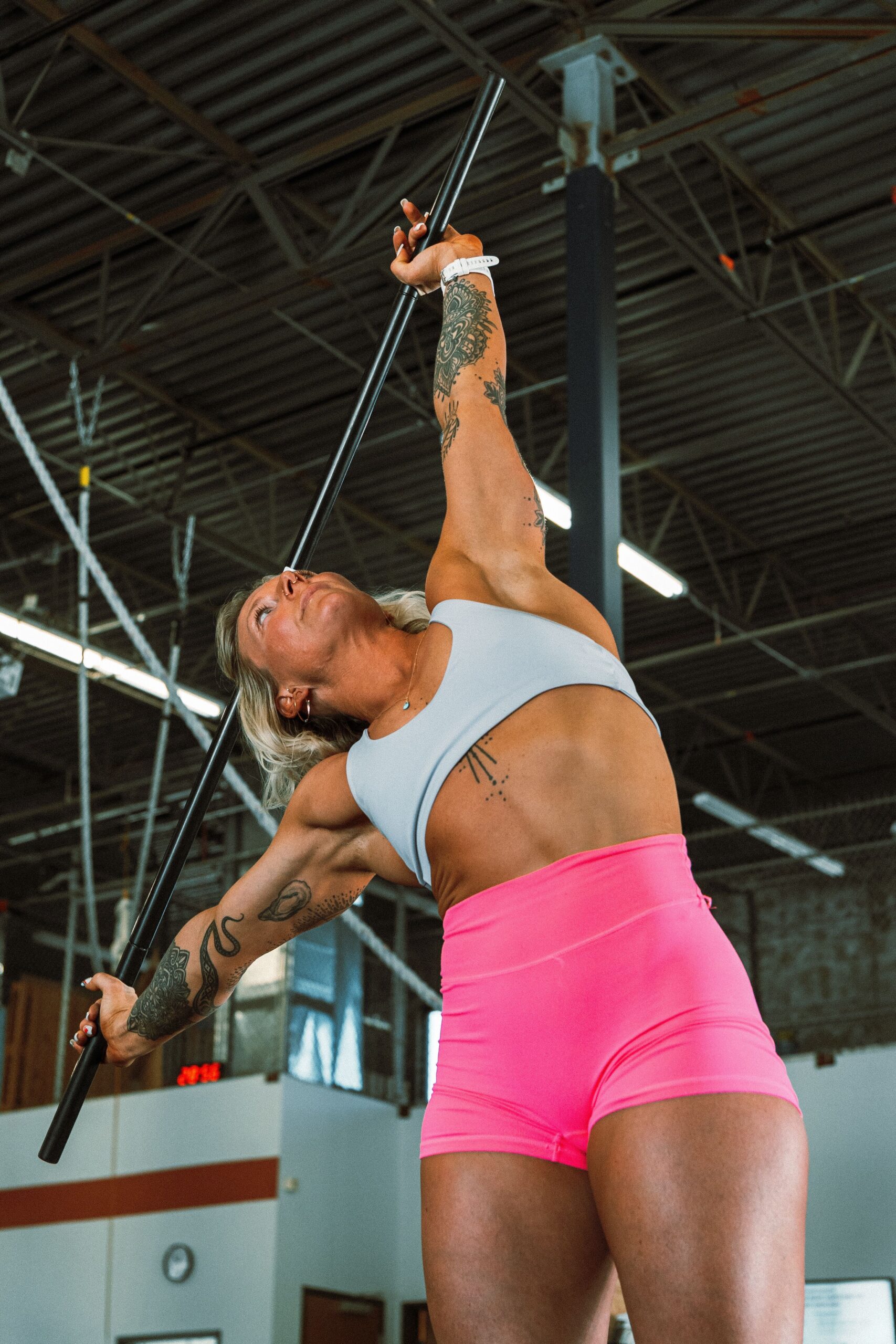
Example: Step-by-Step Glute Activation Warm-Up
Here is a simple lower-body activation progression you can use before exercises like squats, lunges, Bulgarian split squats, lateral lunges or resisted shuffles.
Step 1: Foundational Activation
3 sets of 8 to 10 reps
Start with basic exercises that help you feel the target muscles working.
Glute bridge or single-leg glute bridge
Glute bridges help activate the glutes, teach hip extension and improve pelvic stability. The single-leg version also challenges your ability to stabilize one side at a time.
Side-lying clamshell or clamshell hip raise
Clamshell variations target the glute medius, which plays a major role in hip stability, single-leg control and lateral movement.
Step 2: Standing Resisted Glute Work
3 rounds of 40 to 60 seconds
Once you can feel the glutes working on the ground, move into a standing position.
Examples include:
- Banded lateral walks
- Squatted side steps
- Monster walks
- Banded hip extensions
These movements help you use the muscles you just activated in a more athletic, upright position.
Step 3: Progress the Range of Motion
3 sets of 8 reps per side
Now add more mobility and control through a larger range of motion.
Examples include:
- Lateral lunges
- Reverse lunges
- Cossack squats
- Split squat reaches
This helps prepare your hips, knees, ankles and trunk for loaded movement.
Step 4: Add Single-Leg Control
3 sets of 5 reps per side
Finish with a movement that challenges balance, coordination and muscular recruitment.
Examples include:
- Single-leg squats
- Single-leg squats with reach
- Step-downs
- Single-leg Romanian deadlifts
This is especially useful before exercises that load one leg more than the other, like Bulgarian split squats, step-ups or lunges.
The warm-up is part of the workout.
You should think of your warm-up as part of the workout. It’s just as important as your main lifts for that day.
When you take a few extra minutes to prepare your body, you give yourself a better chance to move well, lift with control, and get more out of every rep. Over time, that adds up to stronger movement, better performance, and a more durable body.
Before you rush into your next workout, slow down. Get warm. Activate the right muscles. Then train hard.
Find Your Perfect Training Plan
Sometimes all you need to reach your destination on your fitness journey is an expert guide. Look no further, we've got you covered. Browse from thousands of programs for any goal and every type of athlete.
Try any programming subscription FREE for 7 days!
Related Articles
You May Also Like...
6 Best Landmine Exercises for Full Body Strength
Although typically used for simple core and functional movements, the landmine is an amazingly versatile tool that can be used as a primary exercise for many muscle groups. If you’re looking for a new way to build overall strength and power, give these 6 effective...

What Is the RPE Scale and How Do We Use It?
If you’re familiar with strength training, you’ve probably heard someone say… Go until it feels tough! PUSH HARDER! …but what does this really mean? How is it possible to quantify words like “tough” or “hard?” How do you know when a set is heavy enough to produce...
Winter Warfare: How to Bulk Up This Season
It’s that time of the year to wreak havoc and prepare for a massive winter bulk! But wait, what is a winter bulk? What does it take, and how do we achieve it? Joseph Lucero (CSCS), owner of Harvesting Strength, is a powerlifter and strongman coach with years of...
6 Best Landmine Exercises for Full Body Strength
Although typically used for simple core and functional movements, the landmine is an amazingly versatile tool that can be used as a primary exercise for many muscle groups. If you’re looking for a new way to build overall strength and power, give these 6 effective...
What Is the RPE Scale and How Do We Use It?
If you’re familiar with strength training, you’ve probably heard someone say… Go until it feels tough! PUSH HARDER! …but what does this really mean? How is it possible to quantify words like “tough” or “hard?” How do you know when a set is heavy enough to produce...

Want more training content?
Subscribe



For Coaches
For Athletes
About
Support
Training Lab
Access the latest articles, reviews, and case studies from the top strength and conditioning minds in the TH Training Lab!
Made with love, sweat, protein isolate and hard work in Denver, CO
© 2026 TrainHeroic, Inc. All rights reserved.